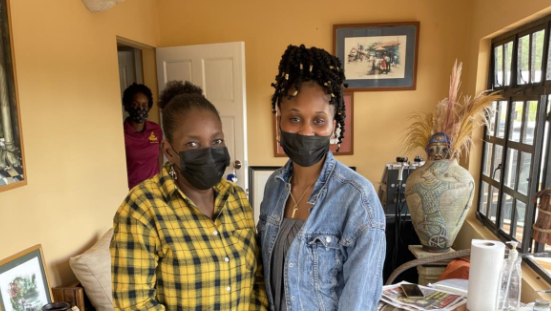
Sixth-year PhD student Jada Gannaway was a 2023-2024 recipient of the Gender, Justice, and Environmental Change Research Fellowship. This fellowship funded her research on the transnational Black Power Movement from 1945 to 1975 in Trinidad and London. Gannaway’s dissertation focuses on the early life of Trinidadian political activist Althea Jones-LeCointe and her former role as the leader of the British Black Panther Movement during the 1960s and 1970s.
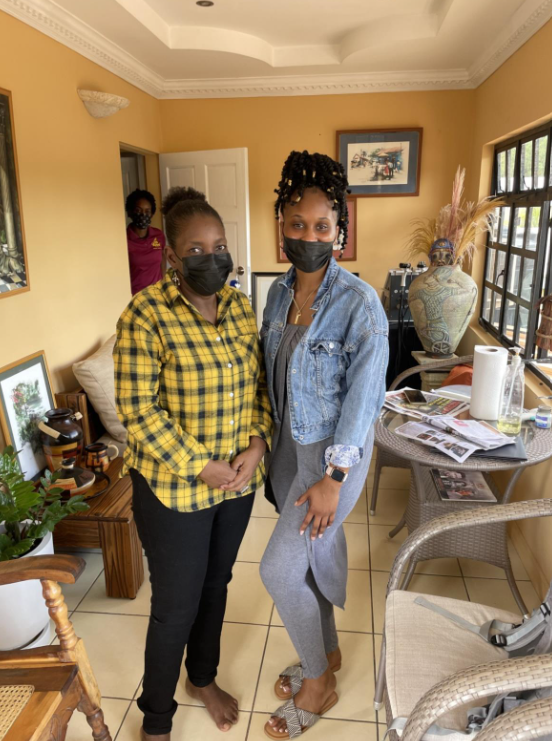
“Due to the political surveillance that she and other Black Panther members faced, [Jones-LeCointe] didn’t really like to be recorded; she doesn’t really care to be interviewed,” Gannaway said. “And so, a story that’s important like this one, I just felt it was important to be there in person to meet her, to meet her family, and so I applied to GenCen and I got the award, and it was a major help. It helped me [to] alleviate financial costs, it allowed me to conduct interviews with untapped sources that no one has ever had the privilege to, it helped me conduct oral interviews with people that no one has ever been able to interview. So, the financial support that GenCen offered was amazing.”
The fellowship from the GenCen that Gannaway received not only allowed her access to invaluable primary sources but also gave her the opportunity to build relationships with the people she interviewed in Trinidad and London who were connected to the topic she is researching.
“[My dissertation] relies heavily on oral histories and so the GenCen has [...] helped me conduct interviews with Althea’s family and friends and associates, and their support also helped me travel to the archives in Trinidad at the Alma Jordan Library and while there I was able to spend hours in the archives, learning about Trinidadian history, learning about what the Black Power movement looked like in Trinidad and how it differed from the west,” Gannaway said. “With the help of GenCen, I was able to make those connections [and] conduct that research. I even have sources that, alongside the interviews I obtained, I have documents that no one has ever used before. I met with a professor in London who was just sitting on this letter that Althea Jones-LeCointe wrote before she left the British Black Panther movement that has never been used before and so I can [now] have access to it.”
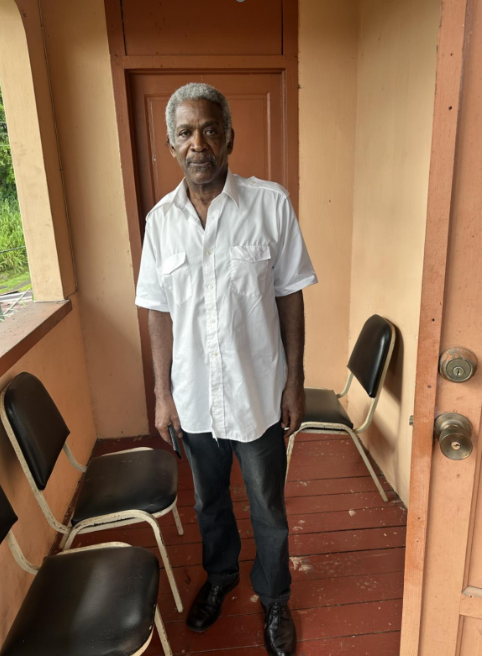
Though Gannaway’s dissertation is titled as a biography of Jones-LeCointe, her research encompasses the experiences and accomplishments of many different activists from a transnational lens. Once her dissertation is complete, Gannaway plans to translate her work into an interactive map that better displays how Jones-LeCointe, and the work of other activists during this time, connected across oceans.
“[Jones-LeCointe] doesn’t like to be seen as the leader of the movement because it was the collective, so in my work, I try to honor her wishes. And so, [while] she’s vital to the movement, I try to focus on other Black women and, not even just women, other Black Afro-Caribbeans and South Asians who participated in the movement, highlighting the systemic racism and the police force and the judicial system,” Gannaway said. “I think that women’s [and] gender studies research is very, very, very important to the work that we do. [...] It tells the public about the efforts that women have done because I feel like another layer is that when people think about the Black Power Movement, they tend to focus on the men and not the women and so with the help of GenCen I was able to not only highlight the experiences of Althea Jones-LeCointe, who was a Black woman, but other women who were active in this movement and organization. So, I would encourage anybody who is doing work on women or gender or race to apply to GenCen just because they believe in the work that we’re doing.”
GenCen’s grants and support from their staff foster interpersonal, global connections, cultivating a greater network of relationships and understanding about cultural pasts as we embark into the future.
EVENT
Joseph & Lucy Lee Memorial Lecture
November 4, 2026

NEWS
Photo contest celebrates international engagement
EVENT
Universal Human Rights Through Indigenous Lenses
November 10, 2026

NEWS
Celebrating 20 years of Muslim Studies at MSU