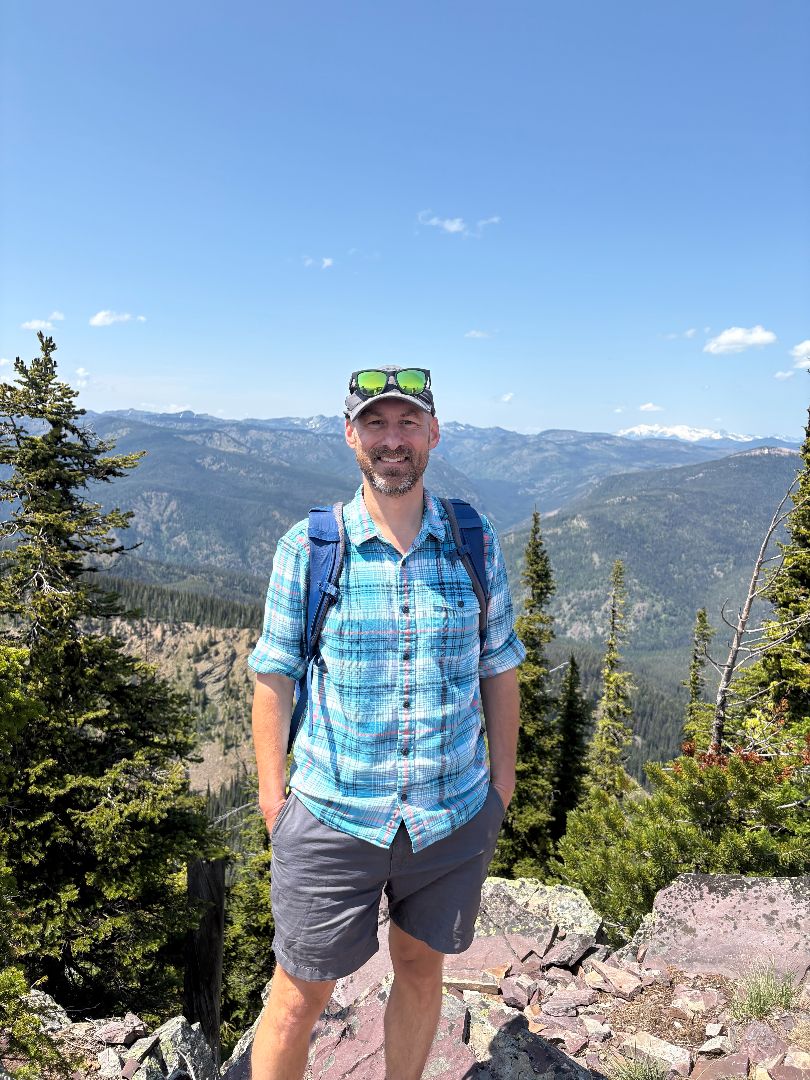
Andrew Finley is a professor of forest biometrics in the Departments of Forestry, and Statistics and Probability. His research interests lie in developing methods for monitoring and modeling environmental processes. Finley is a 2026-27 Fulbright Scholar and will be based in Vienna, Austria for the spring semester.
I've been working with colleagues and students at BOKU University in Vienna for several years, but almost all of that collaboration has been remote. The Fulbright Program felt like a chance to take a productive partnership and make it more meaningful. Getting to be there in person, working side-by-side and getting to know the students and faculty, will allow us to build something together.
Fulbright is not just about doing research somewhere else. It's about exchange. I'll bring my experience in forest statistics and modeling, but I'll also be learning from Austria's long history and strong traditions in forestry. I think that kind of back and forth is where the best ideas often come from.
I'll be based at BOKU University in Vienna for four months, working on better ways to measure and monitor forests. Forests are incredibly important. They provide clean water, wildlife habitat, recreation, biodiversity, public health benefits, and resources we need, like timber and other forest products. They also pull carbon dioxide from the atmosphere and lock it away in wood, which is one of the ways forests help regulate and mitigate the effects of climate change.
The work I do is statistical, but the basic goal is simple: How can we use the data we have to make better decisions about forests? We'll be combining traditional field measurements with newer technologies like laser scanning and satellite data to estimate things like forest growth, biomass, disturbance impacts and timber availability at finer scales than we could before.
I'll also be teaching a graduate seminar on Bayesian spatial data analysis. That sounds technical, but the idea is to help students learn practical tools for working with forest data — not just theory — but methods they can actually use in research, government or industry. We're also planning to make the teaching materials openly available, so they can be used by students and forestry professionals beyond the course itself.
What I'm most looking forward to is getting to work with the people I've collaborated with for the last several years. There's only so much you can do over Zoom. Being in the same place, having everyday conversations, working through ideas together, and spending time with students and collaborators — that's what I'm really excited about.
I'm also looking forward to experiencing Vienna with my family. Living somewhere for a few months is very different from visiting as a tourist. My hope is that we all come away with a deeper appreciation for Austria, its culture, and its approach to forestry and environmental stewardship.
Professionally, I think the experience will make me a better collaborator and teacher. Personally, I think it will be something my family and I remember for a long time.
EVENT
Global Learning Expo
October 8, 2026
NEWS
Photo contest celebrates international engagement
EVENT
A Conversation on Global LGBTQIA+ Experiences
October 7, 2026

NEWS
Celebrating 20 years of Muslim Studies at MSU