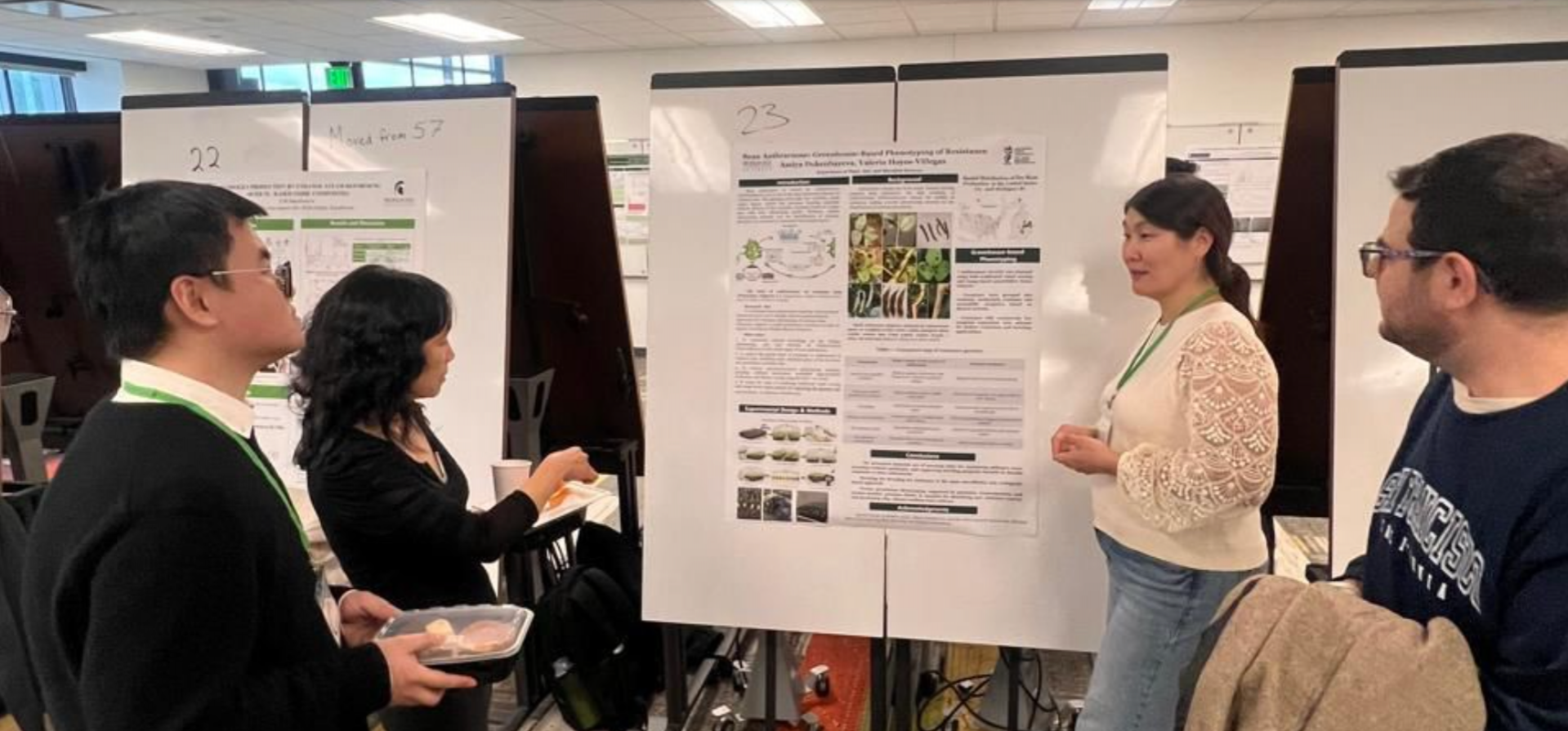
Assiya Dukenbayeva came to Michigan State—one of the world’s top research universities—to invest in her agricultural research abroad and bring it back home to Kazakhstan.
Dukenbayeva is a candidate of biological sciences and an associate professor at the Department of General Biology and Genomics, Faculty of Natural Sciences, L.N. Gumilyov Eurasian National University in Astana, Kazakhstan. She has more than 20 years of research experience in plant sciences, biodiversity, plant pathology, genetics, and crop improvement in Kazakhstan.
Currently, she is completing a scientific internship at Michigan State through the international Bolashak Program “500 Scientists”.
“I was honored to receive this highly competitive scholarship, which gives researchers from Kazakhstan an opportunity for advanced training, international collaboration, and direct experience in leading research laboratories,” Dukenbayeva said.
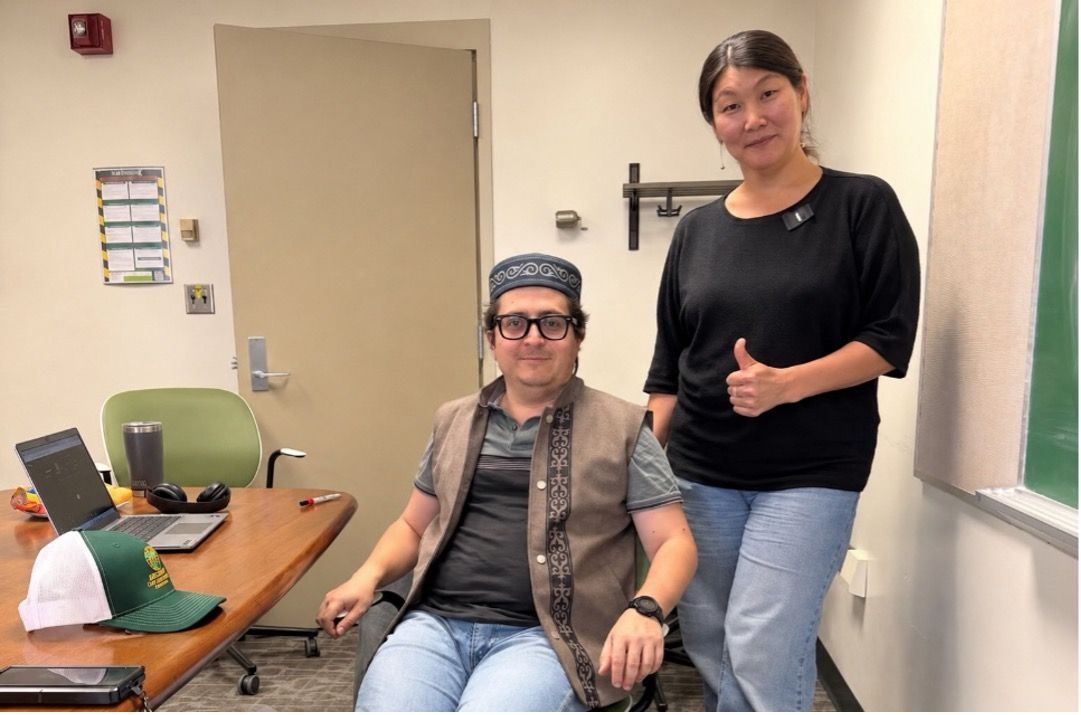
“For Kazakhstan, this research is important because agriculture needs crop diversification, sustainable production, and better protection against plant diseases. Legume crops such as common bean can provide valuable plant protein, improve crop rotation, and support more resilient farming systems,” Dukenbayeva said.
The challenge Dukenbayeva confronts in her research is the biological complexity of anthracnose, as well as connecting greenhouse results with the practical needs of breeding and agriculture.
“If diseases such as anthracnose are not controlled, they can reduce yield, seed quality, and farmers’ income,” Dukenbayeva said. “Selecting resistant genotypes can help reduce economic losses, decrease the need for chemical treatments, and support local breeding programs adapted to Kazakhstan’s climate and production conditions.”
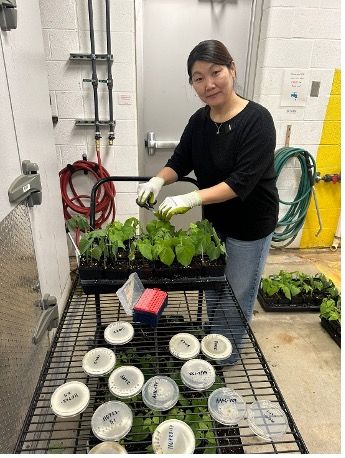
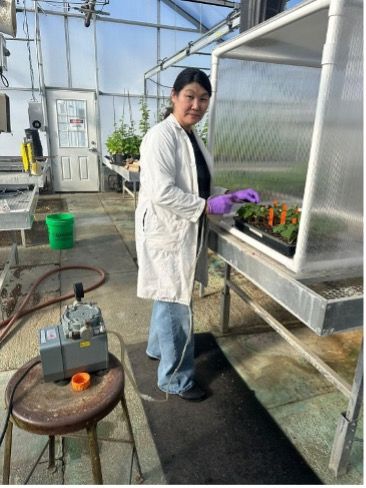
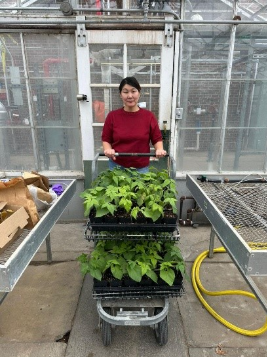
In the Dry Bean Breeding and Genetics Laboratory, Dukenbayeva learned how to organize greenhouse trials, prepare and work with pathogen races, manage plant materials, record disease reactions, and interpret phenotyping results.
“The internship at Michigan State University helped me move my research from a mainly theoretical and descriptive stage to a more experimental and methodologically standardized stage,” Dukenbayeva said.
She also shared that the courses and seminars she engaged in strengthened her research skills and understanding of research design, data analysis, academic writing, and the use of AI in education and research.
“This knowledge is valuable not only for my own project, but also for teaching and mentoring students at my home university in Kazakhstan,” Dukenbayeva said.
She had the opportunity to present her research at several international events, including: the 2025 Amorphophallus Conference organized by Botanic Gardens Conservation International–US and the United States Botanic Garden in San Marino, California, the 2026 International Scholar Showcase at Michigan State University, and the 4th International Conference on Plant Science Research (Plant-2026) in San Francisco, California.
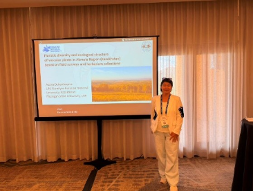
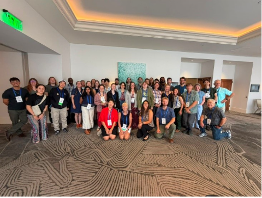
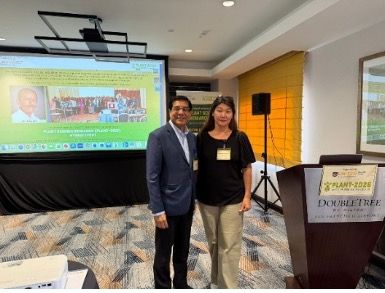
Dukenbayeva is proud to announce she most recently attended a major international conference, Botany 2026: Biodiversity at the Boundaries, this August in Tucson, Arizona.
“The MSU laboratory experience strengthened the experimental part of my conference presentations by adding real greenhouse screening, disease phenotyping, and practical methodology,” Dukenbayeva said. “As a result, my research became more applicable to future breeding work and to the needs of Kazakhstan’s agriculture.”
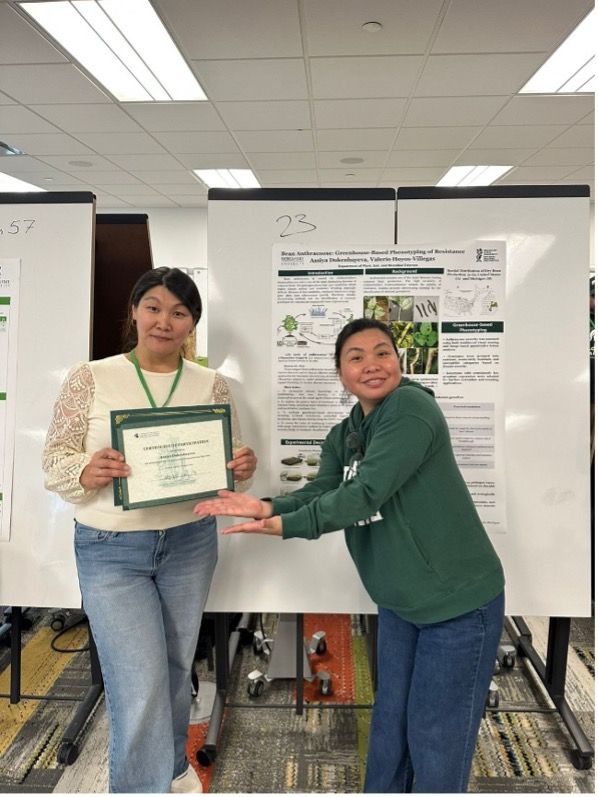
For Dukenbayeva, one of the most meaningful experiences during her stay at MSU has been working in an international scientific environment alongside researchers and students from different countries.
“It strengthened my confidence as a researcher, expanded my international network, and gave me new ideas that I can bring back to Kazakhstan,” Dukenbayeva said. “I hope that the knowledge and experience gained at MSU will contribute to the development of plant science, modern teaching, and sustainable agriculture in my country.”

EVENT
Muslim Journeys Campus Walking Tour
October 15, 2026

NEWS
Photo contest celebrates international engagement

EVENT
Returned Peace Corps Volunteers Tell Their Stories
October 19, 2026

NEWS
Celebrating 20 years of Muslim Studies at MSU